A bezel is the frame around a screen. “Bezel-less” rarely means there is no frame at all. It usually means the frame is so thin that the display seems to reach the edges of the device.
Put an older phone or laptop next to a new one and the difference is obvious: the screen fills far more of the front. Thinner bezels are a big part of that change. But bezels are not just decoration. They protect the panel, hold cameras and sensors, and give your hands somewhere to rest. Whether thinner is better depends on the device and how you use it.
What Is a Bezel?
A bezel is the border between a device’s screen and its outer edge. On a phone, it is the strip around the touchscreen. On a laptop, it is the frame around the panel in the lid. On a monitor or TV, it is the visible edge around the picture.
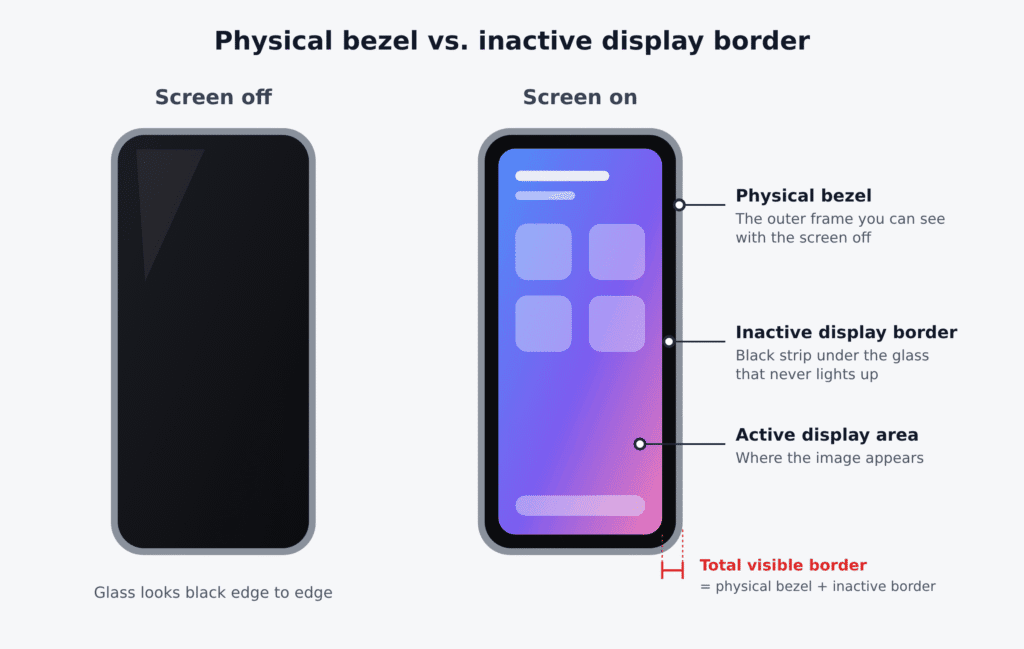
The bezel is not part of the screen. The screen, or active display area, is where the image appears. The bezel surrounds it, and it can be thick, thin, or colored to blend in with the rest of the device.
What Does Bezel-Less Mean?
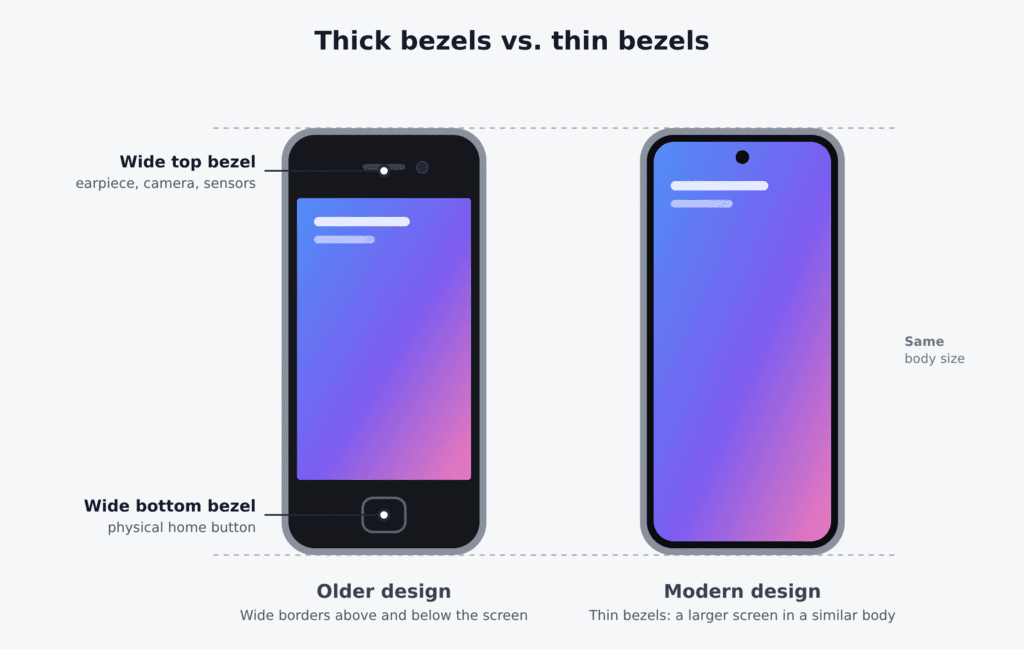
“Bezel-less” describes a screen with a very thin border, not one with no border. The goal is to fit a larger screen into roughly the same size body, which raises the screen-to-body ratio: the share of the front surface taken up by the display.
Manufacturers use several names for the same idea:
- Edge-to-edge display
- Thin-bezel or ultra-thin-bezel display
- Brand names such as Samsung’s Infinity Display (phones) and Infinity Screen (TVs)
The border you see when the screen is on
Many modern displays have two borders: the physical frame you can see when the device is off, and an inactive black strip inside the glass, around the edge of the panel, that never lights up.
In product photos and when the screen is off, the two can look like one thin line. When the screen is on, the inactive strip becomes visible, so the border looks thicker than it did in the marketing images. To judge the real border, turn the screen on and measure from the outer edge of the device to the first lit pixels, or look for reviews that measure it this way.
Why Do Devices Have Bezels?
Bezels exist for three practical reasons.
- They hold and protect the panel. A display has to be fixed into the chassis, and the edge of the panel carries wiring and driver circuits. Depending on the device’s construction, the surrounding frame helps support the panel, conceal its edges and protect vulnerable components.
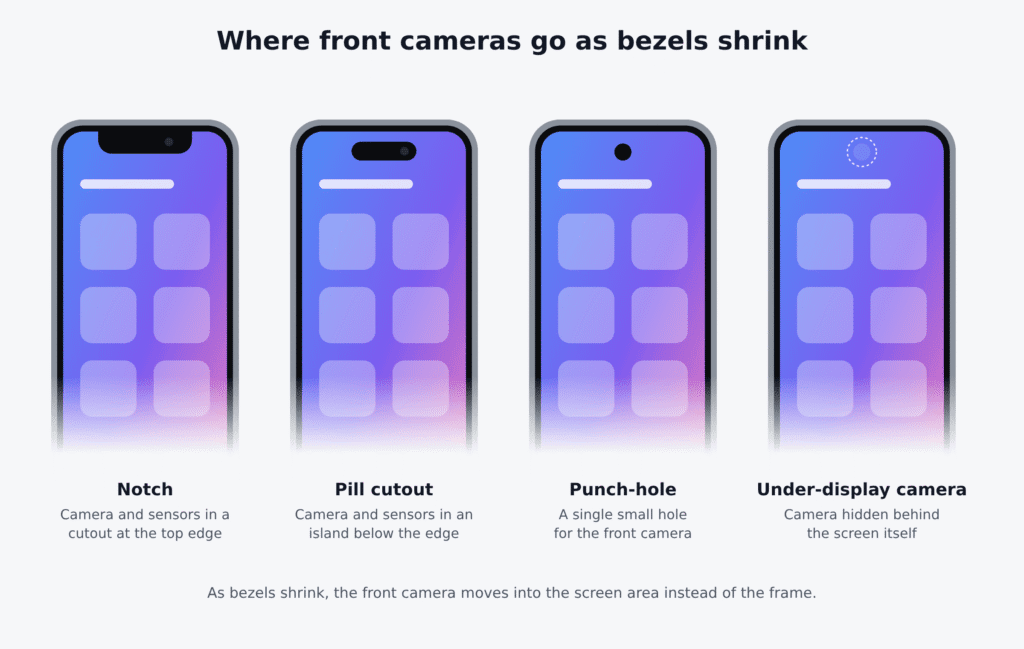
- They house cameras and sensors. Front cameras, webcams, microphones, ambient-light sensors and proximity sensors have traditionally sat in the bezel. As bezels shrank, these parts moved into notches, punch-holes, and in some devices beneath the screen itself.
- They give you somewhere to hold. On tablets and other touchscreens, a border lets your thumbs rest without triggering touches. Software can reject some accidental touches, but physical space is more reliable.
Advantages of Thin Bezels
The main benefit of thin bezels is more screen for the same size device.
- A higher screen-to-body ratio. A thinner frame lets a larger display fit in a similar body. Samsung’s Galaxy S8 (2017) is an early example: Samsung reduced its bezels by about 50% compared with the previous model, and its screen covers more than 80% of the phone’s front.
- A more immersive picture. With less border in view, films, games and photos feel less framed. This matters most on TVs and large monitors.
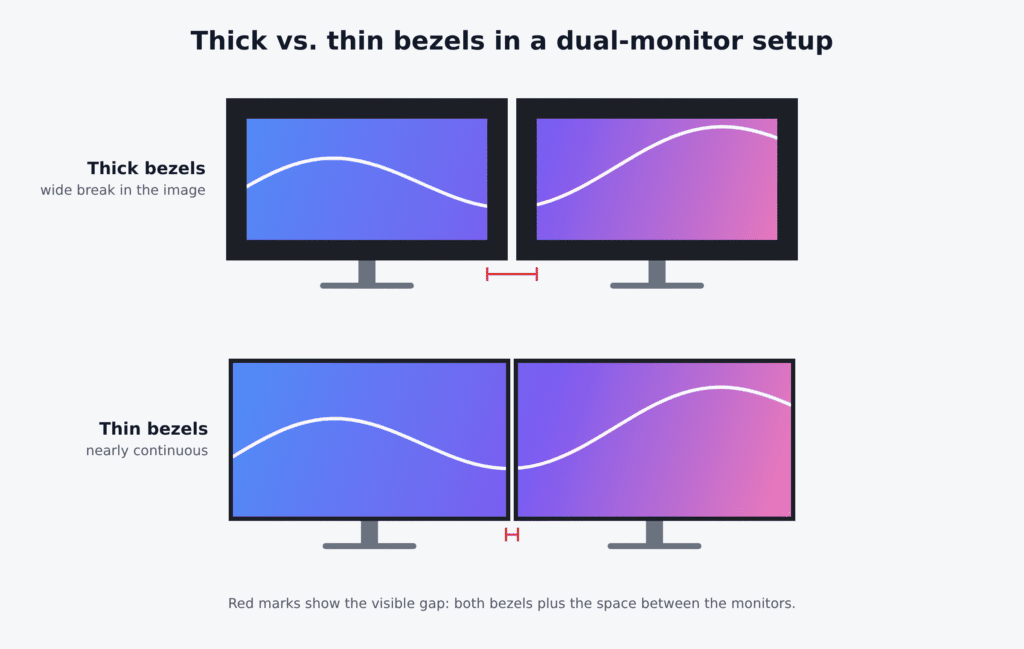
- Smaller gaps between monitors. In a two- or three-screen setup, thin bezels shrink the dark strip between images, so the desktop feels more continuous.
- A more compact device. A laptop with thin bezels can fit a 14-inch screen into a body that once held a 13-inch one. Thin bezels alone do not guarantee a lighter or thinner laptop, though.
Disadvantages of Thin Bezels
Thinner bezels involve trade-offs, and they are not right for every device.
- Less room for components. Cameras and sensors have to go somewhere. That is why phones gained notches, punch-hole cutouts and pill-shaped cutouts, and why some phones still keep a slightly thicker bottom edge, often called a chin.
- More accidental touches. When the display runs close to the edge, your palm or fingers can trigger it while you hold the device. Touch-rejection software helps, but how well it works varies by model.
- Less space to grip. This matters most on tablets, which is why many still keep wider borders than phones do.
- Compromises on laptop webcams. A very thin top bezel leaves little room for a camera. Some laptops have used smaller, lower-quality webcams or moved the camera below the screen, where it films the user from an unflattering angle.
- More exposed edges. Some thin-bezel designs leave the edge of the glass with less frame around it, although drop resistance depends mostly on the device’s overall construction.
How Bezels Differ Across Devices
How much bezel size matters depends on how you hold, carry or view the device.
| Device | What the bezel usually holds | Main benefit of a thinner bezel | Main reason to keep some bezel |
|---|---|---|---|
| Smartphone | Front camera, sensors, earpiece | Bigger screen in a pocketable body | Fewer accidental edge touches |
| Tablet | Front camera, display edge | More screen area | Room to grip with your thumbs |
| Laptop | Webcam, microphones, hinge structure | Larger screen in a smaller lid | A better-placed, better-quality webcam |
| Monitor | Display edge and housing | Smaller gaps in multi-screen setups | Little reason beyond cost |
| TV | Display housing and frame | More immersive picture | Little reason beyond cost |
Smartphones and Tablets
Early smartphones had wide top and bottom bezels for physical home buttons, speakers and cameras. Over the past decade, home buttons disappeared, speakers shrank, and front cameras moved into notches, punch-holes, and in some phones under the display. Thin bezels are now common on smartphones, though their thickness still varies by model and price range.
Tablets are the exception. They are held in two hands, often by the edges, so a modest border prevents stray touches. A tablet with slightly wider bezels is often more comfortable than one that pushes the screen to the edge.
Laptops
On a laptop, the top bezel matters most because it holds the webcam and microphones. Thin side bezels let manufacturers fit a bigger screen into a smaller lid, which helps portability.
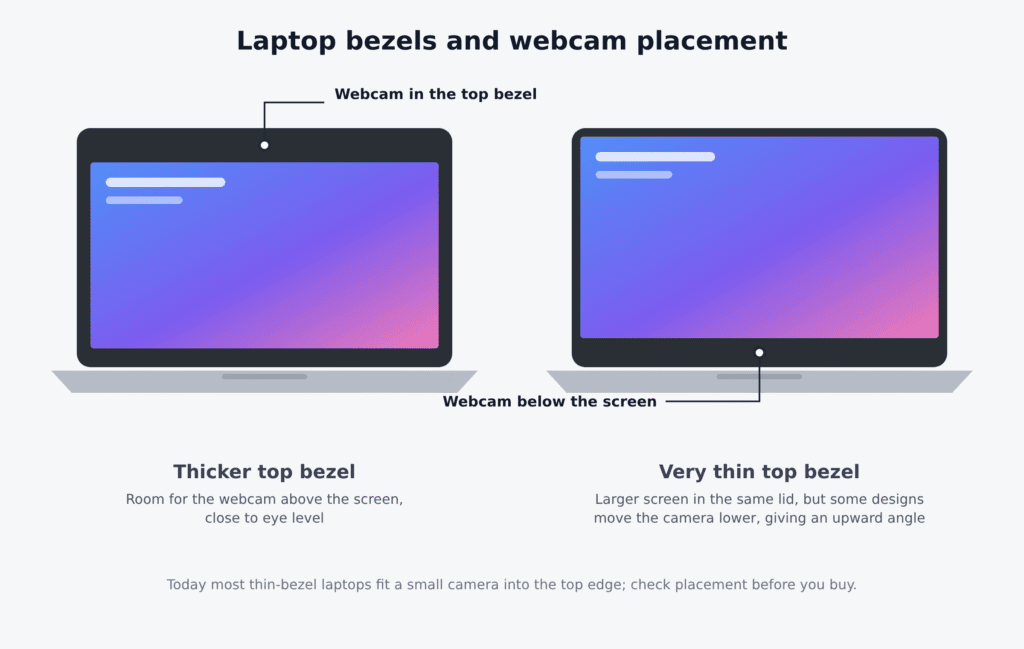
Bezel size tells you nothing about the panel itself. Judge a laptop display by its resolution, brightness, color accuracy and refresh rate, and check where the webcam sits before you buy.
Monitors
Thin bezels pay off most when you place monitors side by side. Two thick-bezel monitors leave a wide dark strip down the middle of your workspace, while thin bezels keep the gap small. This helps for coding, editing, trading and gaming setups. Monitors sold as “borderless” still show an inactive black edge when switched on, so compare the measured gap, not the marketing name.
TVs
TVs can have the thinnest bezels of all because nobody holds them. Samsung, for example, markets its Infinity Screen TVs as nearly bezel-less. Still, bezel size should be a minor factor when you buy a TV. Picture quality, panel type, brightness, HDR support, viewing angles and software matter far more.
If you want to get more from the TV you already own, see our guide to boosting Smart TV picture quality.
How to Choose the Right Bezel Design
Treat bezel size as a design preference, not a measure of quality. A thin bezel improves some devices and makes others harder to use.
- Phones: thin bezels give you more screen without a wider phone, but grip comfort and protection from accidental touches still matter.
- Tablets: a modest border is usually more comfortable to hold.
- Laptops: thin bezels help portability, but webcam position and quality matter more day to day.
- Monitors: thin bezels matter most if you use two or more screens side by side.
- TVs: thin bezels look good, but picture quality should decide the purchase.
Buyer checklist
- Look at photos or reviews of the screen switched on, not just marketing renders.
- For multi-monitor setups, compare the measured gap between screens.
- On laptops, check where the webcam sits and its resolution.
- On tablets and phones, hold the device if you can to test grip and stray touches.
- Check the screen-to-body ratio in the spec sheet when comparing similar sizes.
- Compare panel quality first: resolution, brightness, color and refresh rate.
Frequently Asked Questions
What is a bezel on a screen?
A bezel is the border around the display of a phone, tablet, laptop, monitor or TV. It sits between the active screen area and the outer edge of the device.
What does bezel-less mean?
Bezel-less means the border around the screen is very thin. It does not mean the device has no frame at all.
Are bezel-less screens better?
Not always. Thin bezels give you more screen in a smaller body, but they can cause accidental touches, leave less room to grip a tablet, and push laptop webcams into worse positions.
What is a bezel on a laptop?
It is the frame around the screen in the laptop’s lid. The top bezel usually holds the webcam and microphones.
Why do monitors have thin bezels?
Thin bezels reduce the gap between screens placed side by side, which makes multi-monitor setups look more continuous.
Are bezel-less TVs really bezel-free?
No. TVs sold as bezel-less still have a thin frame and an inactive black border around the picture, which is why makers often describe them as “nearly” bezel-less.

Louis Mugan is a seasoned technology writer with a talent for turning complicated ideas into clear, practical guidance. He focuses on helping everyday readers stay confident in a world where tech moves fast. His style is approachable, steady, and built on real understanding.
He has spent years writing for platforms like EasyTechLife, where he covers gadgets, software, digital trends, and everyday tech solutions. His articles focus on clarity, real-world usefulness, and helping people understand how technology actually fits into their lives.
Outside of his regular columns, Louis explores emerging tools, reviews products, and experiments with new tech so his readers don’t have to. His steady, friendly approach has made him a reliable voice for anyone trying to keep up with modern technology. get in touch at louismugan@gmail.com