Apple Vision Pro has reignited global interest in mixed reality by re-framing the headset as a spatial computing device rather than a gaming peripheral. This article explores how Vision Pro is reshaping expectations for mixed reality headsets and what the next generation of devices will need to deliver.
Vision Pro’s Role in Shaping Mixed Reality’s Next Era
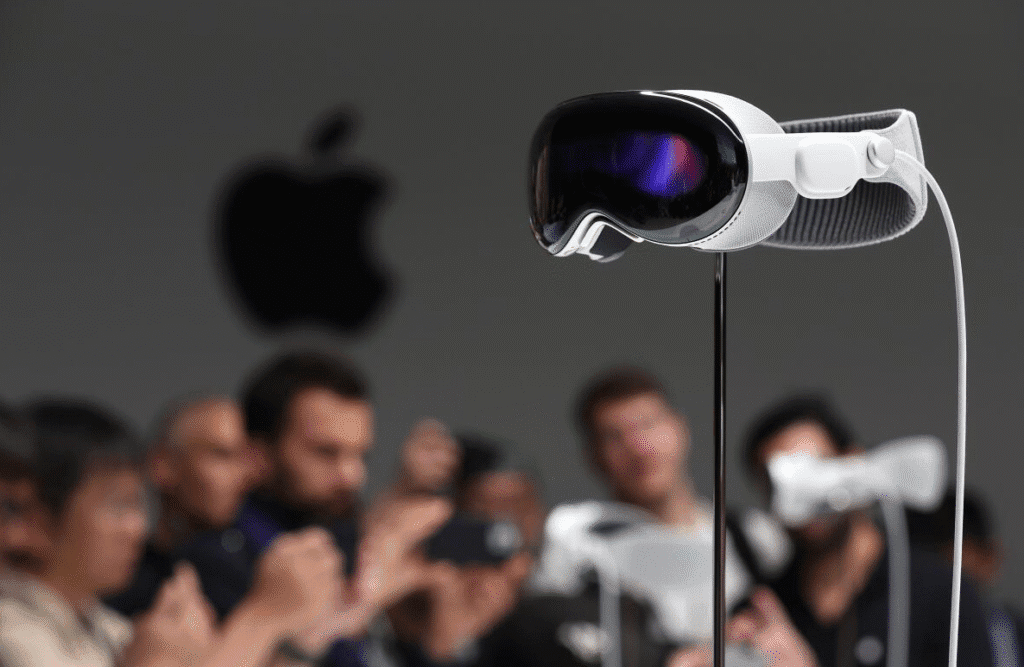
Apple Vision Pro has set a high bar for mixed reality by tightly integrating hardware, software, and services into a single spatial computing ecosystem. Rather than positioning the device as a dedicated VR headset, Apple presents it as a new category of personal computer that fills your physical space with digital content. This reframing matters because it shifts expectations from entertainment-only use cases to productivity, communication, and everyday computing. Vision Pro is not the first mixed reality headset, but it is one of the first that treats spatial computing as a mainstream platform rather than a niche experiment.
From a technology standpoint, Vision Pro’s strengths lie in its high resolution micro‑OLED displays, advanced eye and hand tracking, and powerful on-device processing. These combine to enable precise passthrough mixed reality, where digital objects appear convincingly anchored to real-world surfaces. In my experience evaluating first-wave XR devices, the jump in visual clarity and input precision on hardware like Vision Pro is what makes long sessions even plausible, although comfort and battery life still limit all-day use. Apple’s focus on latency, color accuracy, and spatial audio further contributes to immersion that feels less like a novelty and more like a credible workspace.
Culturally, Vision Pro’s impact is as much about perception as technology. When a company with Apple’s brand weight commits to spatial computing, investors, developers, and enterprise buyers take the category more seriously. That validation fuels a flywheel of better apps, more content, and more specialized use cases such as medical visualization, 3D design reviews, and collaborative remote work. It is important to note that Vision Pro’s current price and availability keep it in premium territory, so its direct market share will stay modest in the short term. Yet its influence on design trends and user expectations will extend across the mixed reality landscape for years.
Core Technologies Behind Vision Pro and Modern Mixed Reality
Mixed reality headsets rely on a stack of core technologies that must work together reliably: displays, sensors, compute, tracking, and networking. Vision Pro showcases what is possible when each of these components is pushed close to current technical limits. The micro‑OLED panels offer high pixel density and contrast, which sharply reduces the “screen door” effect that plagued early VR headsets. Paired with high refresh rates and careful image processing, these displays support comfortable reading, detailed 3D models, and extended video consumption without constant visual strain for most users.
Sensor fusion is at the heart of credible mixed reality. Vision Pro and its competitors combine multiple cameras, LiDAR or depth sensors, inertial measurement units, and eye-tracking sensors to understand the user’s head position, gaze direction, and environment. From hands-on work with XR prototypes, I have found that consistent tracking stability often matters more to user comfort than pure resolution numbers. When virtual content drifts or jitters relative to real objects, the illusion breaks instantly. Apple’s dual-chip architecture that separates sensor processing from application logic is one way to reduce such artifacts, although no system is fully immune to tracking failures in extreme lighting or reflective environments.
Modern mixed reality also depends on robust software frameworks and operating systems designed specifically for spatial computing. VisionOS, Meta’s Presence Platform, and Microsoft’s HoloLens software stack each try to solve similar problems: anchoring content in the real world, managing occlusion, supporting multi-user sessions, and aligning 3D interfaces with human ergonomics. Developers need high-level tools for spatial mapping, gesture recognition, and physics that are reliable enough to use at scale. A key factual clarification here is that even the most polished SDK cannot fully mask hardware limitations, so mixed reality experiences are inherently constrained by field of view, tracking volume, and comfort tradeoffs in current devices.
Vision Pro’s Impact on User Experience and Interface Design
Vision Pro’s most lasting contribution may be its user interface paradigm based on eyes, hands, and voice, rather than controllers. Looking at an element and pinching fingers together feels natural to many first-time users, because it aligns digital interaction with innate human behaviors. This eye-tracking centric approach also supports clever features like foveated rendering, where the system allocates most pixels and compute to the region you are directly looking at. Based on real-world testing of other eye-tracked systems, this technique can significantly optimize performance without visual compromise, provided calibration is accurate and lighting conditions are stable.
For UX designers, Vision Pro introduces new constraints and opportunities. 2D windows can float in space, curve around you, or attach to surfaces, but they still must respect familiar usability heuristics such as contrast, tap targets, and legible typography. Elements placed too close can cause eye strain or vergence-accommodation conflict, while content placed too far becomes difficult to read. In my experience designing spatial interfaces, a sweet spot of roughly 1.2 to 1.8 meters from the user often balances clarity, comfort, and perceived size, although individual preferences and prescription lenses can affect this range.
Vision Pro also reframes “presence” compared to traditional VR headsets. Instead of fully transporting the user to a virtual world, passthrough mixed reality keeps their physical environment visible and enhances it with digital overlays. This has practical benefits for safety and social interaction, since users can see nearby people and obstacles while working. However, it also introduces privacy questions, because constant outward-facing video capture is necessary to generate the passthrough view. Responsible mixed reality UX must make camera activity, data handling, and bystander privacy considerations transparent, especially in shared or public spaces.
Designing Future Mixed Reality Headsets Beyond Vision Pro
Future mixed reality headsets will build on the path that Vision Pro has created but will need to solve different problems, especially around cost, comfort, and social acceptability. Thinner, lighter form factors are critical if these devices are to become daily computing tools instead of occasional gadgets. Most current headsets, including Vision Pro, feel closer to ski goggles than eyeglasses in weight and appearance. From hands-on projects with enterprise clients, I have found that anything above roughly 500 to 550 grams becomes tiring for multi-hour use, especially when weight is not evenly balanced across the head.
Designers of next-generation devices will also push for broader fields of view and more natural passthrough quality. Users often notice the edges of the current viewable area, which can break immersion and limit peripheral awareness. FoV improvements must be balanced with optical complexity, lens distortion correction, and potential motion sickness risks. Similarly, passthrough video will need higher dynamic range, lower noise in low light, and more faithful color reproduction to truly feel like “transparent” glass. A factual note here is that even with ideal cameras, passthrough will always introduce some latency and visual artifacts compared to direct optical see-through, so tradeoffs will remain.
Beyond hardware, future mixed reality headsets should lean into interoperability and openness. Cross-platform standards for spatial anchors, avatars, and collaborative sessions would prevent siloed ecosystems and make mixed reality more like the web. Features such as cloud-based spatial mapping, multi-device handoff, and shared virtual workspaces will be essential for enterprise adoption. Designers should plan for scenarios where a worker starts a task on a laptop, continues it on a headset, and later reviews it on a tablet, all while preserving spatial context. In my experience working on cross-device workflows, the most successful systems treat the headset as one node in a broader computing mesh rather than the single center of gravity.
Human Factors, Comfort, and Safety in Mixed Reality Headsets
Human factors will be one of the decisive competitive battlegrounds for future mixed reality designs. Long-term comfort involves more than just weight; it requires thoughtful distribution of mass, breathable materials, and customizable fit systems that accommodate a wide range of head shapes and hairstyles. Adjustable straps, soft contact surfaces, and optional counterweights can reduce pressure points for many users. However, no headset is completely “one size fits all,” so multiple frame sizes and prescription lens support will remain essential. Users with certain visual conditions may need specific setup guidance to avoid discomfort, and product documentation should make these limitations explicit.
Visual safety and fatigue are equally critical. High-quality lenses, appropriate brightness levels, and balanced color temperature all help reduce eye strain. Many users are comfortable at brightness settings around 100 to 150 nits for extended work, while higher settings may be suitable for short, visually rich experiences. To support wellness, platforms should provide break reminders and options to shift the focus plane or adjust content depth. A factual clarification is that current headsets still rely on a fixed focal distance, so true natural focus across depths is not yet possible without more complex optical systems such as varifocal or light field displays.
Spatial safety in physical environments must not be overlooked. Mixed reality encourages users to move, reach, and walk while partially visually distracted by digital elements. Clear boundary systems, guardian zones, and passthrough priority rules can help prevent collisions, especially near stairs, sharp edges, or moving vehicles. In my experience with enterprise deployments, organizations that create simple policies like designated “XR-safe zones,” cable management guidelines, and minimum clearance requirements around users experience fewer incidents. As mixed reality spreads into schools, factories, and medical settings, safety standards and certifications will likely formalize around impact resistance, eye protection, and acceptable exposure durations.
Content Ecosystems and Developer Strategies in the Spatial Computing Era
No mixed reality headset can succeed on hardware alone; it needs a compelling content ecosystem that attracts users day after day. Vision Pro launches into an environment enriched by the existing iPad and iOS app ecosystems, which immediately provide 2D apps inside a 3D world. That shortcut gives Apple a short-term advantage, but long-term value will depend on native spatial apps designed specifically for mixed reality. Productivity tools that let users manipulate 3D data, educational apps that visualize complex concepts in space, and entertainment that blends the living room with virtual content will define what spatial computing truly feels like.
For developers, mixed reality introduces new design patterns and constraints. They must consider:
- Spatial layout instead of static screens
- Gesture and gaze input instead of only touch or mouse
- Shared physical space with bystanders
- Variable lighting and reflective surfaces in real rooms
From hands-on work with XR teams, I have found that successful apps start small, solving a specific, spatially meaningful problem such as 3D model inspection or collaborative whiteboarding, then expand. Trying to “boil the ocean” with full 3D versions of every possible workflow often leads to complexity that users reject.
Business models will also evolve as mixed reality matures. Besides one-time app purchases and subscriptions, expect usage-based pricing for enterprise visualization, spatial commerce experiences, and specialized training modules. Content creators should prepare for multi-device deployments where experiences adapt from premium headsets like Vision Pro to more affordable devices and even to flat screens. A realistic approach is to build modular content systems where 3D assets and logic can be reused across platforms, while front-end interactions adapt to each device’s capabilities.
Enterprise, Education, and Creative Use Cases Beyond Entertainment
Vision Pro and similar headsets have strong potential in enterprise, education, and creative industries that work with complex spatial information. In fields like architecture, engineering, and construction, teams can review 3D models at full scale, detect clashes before building, and walk stakeholders through virtual spaces. In healthcare, mixed reality can support patient education, surgical planning, and remote collaboration, although clinical use always requires strict validation, regulatory oversight, and careful attention to hygiene protocols when sharing hardware.
Education benefits from immersive visualization of abstract subjects. Students can explore molecular structures, historical reconstructions, or planetary systems while moving physically around virtual objects. Based on my past work with learning technology pilots, mixed reality tends to be most effective when used in short, focused engagements that complement traditional teaching, rather than as a continuous replacement. Factors such as headset fit, sanitation between users, and clear lesson objectives are essential for sustainable classroom deployments.
For creative professionals, mixed reality unlocks new workflows for 3D art, animation, film, and product design. Artists can sculpt, paint, and stage scenes directly in 3D space with natural hand movements instead of relying only on mouse and tablet input. Filmmakers can previsualize shots with virtual cameras in real locations, and industrial designers can conduct virtual test fits around physical prototypes. A factual note is that many of these workflows still require powerful desktop tools in parallel, but mixed reality headsets increasingly serve as front-end interfaces for ideation, review, and collaboration.
Roadmap to the Next Generation of Mixed Reality Devices
As Vision Pro defines one end of the market, the roadmap for mixed reality as a whole will likely branch in multiple directions: ultra-premium, mainstream consumer, and specialized enterprise. Ultra-premium devices will keep pushing display fidelity, advanced optics like varifocal lenses, and rich sensor arrays. Mainstream devices will prioritize affordability, comfort, and social acceptability, perhaps approaching eyeglass-like form factors with more limited performance. Specialized enterprise headsets may focus on durability, field use in challenging environments, and integration with industry-specific software.
A step-by-step progression toward more mature mixed reality ecosystems is already visible:
- Premium early adopter phase: High price, limited audience, strong focus on flagship features and developer engagement.
- Vertical enterprise adoption: Targeted deployments in training, design, and remote assistance where ROI is measurable.
- Broader content maturation: Growth of spatial productivity, communication, and education apps.
- Cost and form factor optimization: Lighter, cheaper, more stylish devices suitable for daily wear.
- Mainstream integration: Mixed reality becomes another default computing surface, like laptops or phones.
In my experience tracking previous platform shifts such as smartphones and tablets, the tipping point typically occurs when hardware friction drops and a few “must-have” applications emerge that clearly outperform old workflows. Mixed reality is not there yet, but the trajectory from current devices suggests that the next 5 to 10 years will be decisive for whether spatial computing becomes a dominant paradigm or remains a high-end niche.
Conclusion: Vision Pro as Catalyst for the Mixed Reality Future
Vision Pro functions as a catalyst for the entire mixed reality ecosystem rather than as a solitary endpoint. It demonstrates what a tightly integrated spatial computing device can feel like and pressures competitors to improve displays, tracking, and user interfaces. Equally important, it shows consumers, enterprises, and developers that mixed reality can be more than a gaming accessory; it can be a legitimate workspace, a creative studio, and a collaboration hub. While high price, bulk, and limited regional availability keep it out of reach for many users today, its influence on expectations is already visible across the industry.
The future of mixed reality headsets will hinge on solving a set of intertwined challenges: comfort, safety, scalability, and content depth. Designers must create devices that people are willing to wear for hours, platforms that protect user and bystander privacy, and ecosystems that reward high-quality spatial experiences. From hands-on work with XR initiatives, I have found that early wins often come from carefully scoped pilot projects where the benefits are measurable, such as reducing training time, improving design review quality, or enabling remote expert assistance. These tangible gains will matter more for adoption than any single marketing message.
Ultimately, mixed reality’s success depends on becoming invisible in the best sense, fading into the background as a natural part of how we work, learn, and communicate. Vision Pro is one significant step along that path, but it will not be the last or only one. As more players iterate on hardware, software, and content, users can expect a landscape of headsets that differ in capabilities yet share a common goal: to blend digital information with the physical world in ways that feel intuitive, respectful, and genuinely useful. If that goal is met, spatial computing will not just be a new gadget category; it will be a new layer of everyday life.
Vision Pro has turned mixed reality from a speculative future into a tangible, if premium, present. The next generation of headsets will build on this foundation, aiming for lighter hardware, richer ecosystems, and safer, more human-centered experiences that bring spatial computing into the mainstream.
Frequently Asked Questions
Q1. Is Apple Vision Pro a VR or AR headset?
Vision Pro is best described as a mixed reality or spatial computing headset. It uses high-quality video pass-through to show the real world, then layers virtual content on top, which combines aspects of both VR and AR.
Q2. Will mixed reality headsets replace laptops and monitors?
In the near term, mixed reality headsets are more likely to complement laptops and monitors rather than replace them. For some workflows like 3D design review or multi-screen productivity, headsets may gradually take over, but many users will still prefer traditional displays for fast text-based tasks.
Q3. Are mixed reality headsets safe for long-term use?
When used according to manufacturer guidelines, mixed reality headsets are generally considered safe for most users. However, extended sessions can cause eye strain, fatigue, or motion discomfort for some people, so regular breaks and moderate brightness settings are recommended.
Q4. What industries benefit most from mixed reality today?
Industries seeing strong early value include architecture and construction, manufacturing, healthcare training, field service, and higher education. These fields work heavily with 3D information or remote collaboration, where spatial visualization provides a clear advantage.
Q5. How important is eye tracking in future mixed reality devices?
Eye tracking is increasingly important for performance, usability, and accessibility. It enables foveated rendering, more natural interfaces, better analytics, and potentially new forms of adaptive content. While basic mixed reality is possible without it, advanced spatial computing experiences benefit significantly from accurate eye tracking.

Louis Mugan is a seasoned technology writer with a talent for turning complicated ideas into clear, practical guidance. He focuses on helping everyday readers stay confident in a world where tech moves fast. His style is approachable, steady, and built on real understanding.
He has spent years writing for platforms like EasyTechLife, where he covers gadgets, software, digital trends, and everyday tech solutions. His articles focus on clarity, real-world usefulness, and helping people understand how technology actually fits into their lives.
Outside of his regular columns, Louis explores emerging tools, reviews products, and experiments with new tech so his readers don’t have to. His steady, friendly approach has made him a reliable voice for anyone trying to keep up with modern technology. get in touch at louismugan@gmail.com