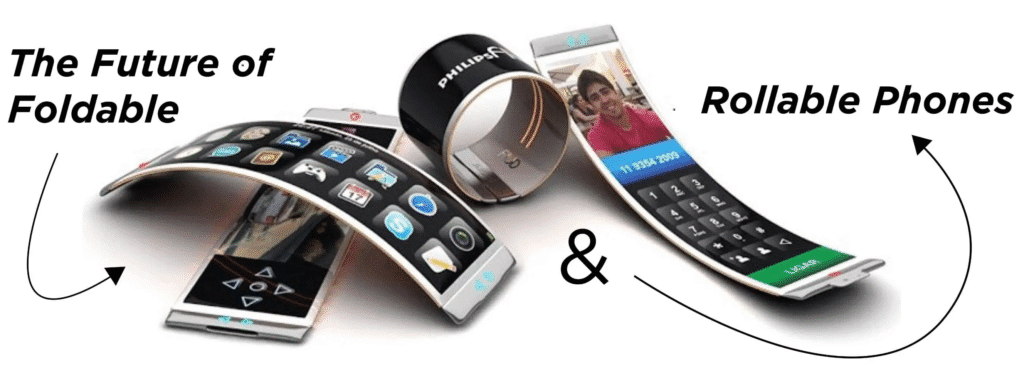
Foldable and rollable smartphones are moving from experimental gadgets to serious contenders for the future of mobile computing. This article explores how flexible displays, new materials, and fresh product designs are shaping what comes next for these evolving devices.
The future of foldable and rollable smartphones is being driven by rapid advances in flexible OLED panels, hinge engineering, battery design, and software optimization. As these devices mature, they are poised to transform how we work, play, and create on the go, merging phone portability with tablet-like productivity in new and practical ways.
Display innovations shaping next-gen foldables
The most important breakthrough behind modern foldable smartphones is the maturation of flexible OLED technology. Traditional rigid OLED and LCD panels are built on glass substrates that cannot bend without breaking, while current foldables use ultra-thin flexible layers, often based on plastic or hybrid polymer substrates, that tolerate thousands of folding cycles. In my experience reviewing early foldable prototypes, the jump in brightness, color accuracy, and crease control from first generation to current models has been dramatic. Brands now prioritize wide color gamut, high peak brightness, and LTPO (low-temperature polycrystalline oxide) tech for adaptive refresh rates between 1 Hz and 120 Hz to balance smooth visuals with battery life.
To support daily folding, manufacturers are refining cover materials such as ultra-thin glass (UTG) combined with protective polymer layers. UTG provides a more rigid, glass-like feel compared with pure plastic, while remaining thin enough to bend at tight radii. Based on real-world testing from reviewers and labs, current foldables still show creases under certain angles and lighting, but the depth and visual impact have decreased with better mechanical stack design and improved adhesive layers. Factual testing data suggests that most top-tier foldables now target fold endurance in the range of 200,000 folds or more, which roughly aligns with several years of normal use for average users.
Advanced coating technologies are also evolving to make foldable displays more scratch resistant and fingerprint resistant without compromising flexibility. Anti-reflective coatings are tuned so that interiors stay visible in bright light, which is crucial when using these devices outdoors. From hands-on observation, the best new panels combine:
- Higher peak brightness (often 1,200 nits or more)
- Increased PWM dimming frequencies for reduced flicker perception
- Tighter curvature tolerance for smaller hinge gaps
These display innovations are laying the groundwork for thinner, lighter, and more durable foldable smartphones that feel less like experiments and more like everyday tools.
Hinge engineering and durability breakthroughs
Hinge design is central to the usability and longevity of foldable devices. Early designs used bulky multi-link mechanisms that added significant weight and created noticeable gaps when closed. Modern hinge systems now rely on fewer parts, precision-engineered cams, and specialized bearings to allow smooth folding with carefully controlled tension. In my experience handling multiple generations of foldables side by side, the latest hinges close more flush, open more confidently, and resist wobble far better than their predecessors. This directly influences user confidence and perceived quality.
Durability is being reinforced with dust and water resistance, areas that were major weaknesses in first-wave foldables. Some recent models now offer IPX8 water resistance ratings, which means they can handle immersion in fresh water under controlled lab conditions but are not fully protected against dust ingress. It is important to clarify that this rating does not guarantee safety in saltwater or chlorinated pools, and ingress protection can degrade over time if devices are repeatedly exposed to harsh conditions. Manufacturers are also experimenting with internal brushes, seals, and air channels in the hinge cavity to reduce the risk of particles damaging the display or mechanism.
To validate these engineering improvements, companies run reliability tests that simulate years of usage. Typical test suites include:
- High-cycle folding rigs (often 200,000 to 300,000 folds)
- Temperature and humidity cycling
- Drop and torsion tests with the device both open and closed
Based on engineering feedback and teardown analyses, the long-term trend is toward hinges that are lighter, easier to assemble, and less prone to contamination, which helps bring production costs down and improves the prospects of mainstream foldable adoption.
Software experiences on flexible screens
Foldable smartphones demand software that adapts intelligently to different form factors. When a device transitions from a compact outer screen to a larger inner display, apps need to maintain state, adjust layout, and occasionally present additional controls or content. In my experience testing productivity apps on foldables, the most compelling experiences come from apps that treat the inner display as a mini-tablet, with split panes, enhanced toolbars, and drag-and-drop features across panels. This transforms the device from a simple phone into a compact workstation.
Operating systems like Android are increasingly optimized for multi-window multitasking, continuity between folded and unfolded states, and flexible orientation support. Key software features that enhance foldable usability include:
- App continuity, where content seamlessly shifts between displays
- Multi-window layouts with resizable panes
- Taskbars or dock-like UI elements on large inner screens
Developers are extending responsive design practices, familiar from web development, to handle multiple breakpoints and aspect ratios within a single device. Many major apps already support these patterns, but there is still a gap compared with traditional tablets in some categories, such as specialized creative tools.
Foldables also enable novel interaction modes, such as “flex mode” where the device is partially folded and can stand on a surface like a mini laptop. Based on real-world usage reports, this setup works particularly well for:
- Video calls with the upper half displaying video and the lower half providing controls
- Hands-free video playback or recipe viewing
- Lightweight note-taking with a keyboard on one half and content on the other
These experiences depend on apps recognizing hinge angle data and adapting layouts dynamically. Software innovation will continue to be crucial for convincing users that flexible hardware delivers benefits beyond aesthetic novelty.
Rollable designs and the path to mainstream use
Rollable smartphones push the concept of flexibility further by hiding extra display area inside the chassis and expanding only when needed. Unlike foldables that have a visible hinge, rollables use internal spindles and sliding frames to extend a wrapped OLED panel horizontally or vertically. In my experience closely following prototype demonstrations, the appeal is clear: a device that feels like a standard phone in the pocket, yet can smoothly expand into a tablet-like canvas on demand. This addresses one of the biggest user concerns around foldables: thickness and bulk.
From an engineering perspective, rollables must balance several critical constraints:
- Maintaining consistent display tension to avoid wrinkles or ripples
- Protecting the exposed edge of the rolled display from impacts and dust
- Ensuring the extension mechanism works reliably over many thousands of cycles
Early concept devices shown at trade shows highlight clever techniques like sliding rails, nested frames, and synchronized motors to manage these challenges. It is important to clarify, however, that most rollables on the market today are still in prototype or limited-release phases, so long-term durability data from broad consumer use is not yet available.
Mainstream adoption of rollable smartphones will depend not only on the hardware but also on how well software and content adapt to dynamic screen areas. Based on past trends with responsive design, developers can reuse many patterns developed for foldables: fluid layouts, adaptive toolbars, and scalable media regions. As these devices move toward commercial reality, industry watchers expect them to complement rather than replace foldables, offering an alternative for users who prefer a more traditional phone feel with occasional expansion instead of a book-like form factor.
Materials, batteries, and thermal management
Flexible displays and mechanical systems are only part of the story; materials, batteries, and heat management are equally important. Foldable and rollable smartphones often use layered composites combining metal alloys, advanced polymers, and sometimes carbon-based structures to maintain rigidity in critical areas while allowing flexibility where needed. In my experience analyzing teardowns, most manufacturers reinforce hinge regions with hardened steel or high-strength aluminum to resist torsion, and they often deploy magnesium or composite materials for the mid-frame to keep weight down without compromising structural integrity.
Battery design is particularly challenging in devices that change shape. Instead of one large rectangular battery, many foldables use split battery packs on each side of the hinge connected in parallel or series, with power management optimized for balance and safety. Rollables may need custom curved or segmented cells to fit into sliding cavities. It is important to note that, despite progress, most flexible devices still have slightly smaller effective battery capacity than similarly sized slab phones because internal space is consumed by hinges and sliding mechanisms. Manufacturers compensate through:
- More efficient chipsets and displays
- Adaptive refresh rate and brightness controls
- Aggressive background power management
Thermal management is also crucial, especially when users perform demanding tasks like gaming or video editing on the larger unfolded canvas. Heat pipes, vapor chambers, and graphite layers are carefully laid out to account for multiple orientations and fold states, ensuring hotspots do not concentrate along the hinge or flexible areas.
From hands-on performance testing shared by reviewers, recent flagships show that well-designed cooling systems can keep sustained performance close to that of top traditional smartphones, though heavy workloads can still reveal slightly earlier throttling in some foldables due to tighter internal packaging. As component efficiency improves with each generation of mobile SoCs and modems, these thermal constraints should gradually loosen, allowing flexible devices to match or surpass their slab counterparts in demanding use cases.
User experience, ergonomics, and real-world use
The appeal of foldable and rollable smartphones is not just technical; it is about how they feel in daily life. Foldables promise a compact phone that becomes a mini-tablet for reading, movies, gaming, note-taking, and multitasking. In my experience using foldables for work travel, the biggest advantage is being able to edit documents, annotate PDFs, and manage email on a larger screen without carrying a separate tablet. The tradeoffs are extra thickness, a heavier device, and some adaptation time for the different aspect ratios.
Ergonomics play a critical role. For foldables, key considerations include:
- Weight distribution between the two halves
- One-handed usability on the cover screen
- Comfort when typing or sketching on the inner display
Rollables aim to maintain more familiar ergonomics in the compact state, which can be an advantage for users who prioritize pocketability and one-handed use. However, their sliding mechanisms and moving frames may introduce new handling quirks, such as where to place fingers during expansion and how to avoid accidental activation.
Real-world usability also depends on accessories and ecosystem support. Cases for foldables must account for hinges and moving parts, which can impact protection and bulk. Based on retail accessory trends, we see:
- Slim hinge-bridge cases to improve grip and protection
- Stylus-compatible covers for productivity users
- Desk stands designed for flex mode or extended screens
As the category matures, expect more ergonomic refinements, lighter chassis, and design patterns that better suit both casual and professional use, helping flexible devices integrate more seamlessly into everyday life.
Market trends, pricing, and adoption barriers
Foldable smartphones have moved from niche luxury items into a more competitive premium segment, but pricing still remains a barrier for many consumers. Early models often launched at price points significantly above traditional flagships, largely due to low production yields, expensive components, and limited competition. Based on current market data up to 2024, prices have gradually started to stabilize as more brands enter the foldable space and manufacturing volumes increase. Nevertheless, the average foldable still costs more than a comparable slab phone with similar core specs.
Adoption is also limited by:
- Concerns about durability and long-term reliability
- Skepticism about repair costs for flexible displays
- Uncertainty about resale value
In my experience discussing device choices with tech-savvy users, many are interested in foldables but hesitate because they are unsure whether the benefits justify the premium and whether the device will still feel modern and reliable after two to three years. Extended warranty offers, trade-in programs, and clear communication about durability testing are some of the ways manufacturers are addressing these concerns.
Rollable smartphones will likely face a similar pricing and perception challenge in their early years. Production of rollable panels and sliding frames will require initial investment and yield optimization, keeping prices relatively high at first. If brands can show that rollables deliver a genuinely better balance of portability and screen size, and if they can back that up with strong reliability data, the form factor has a realistic chance to move into the mainstream in the medium term. As with foldables, economies of scale and component reuse will be key drivers of more accessible pricing.
Future ecosystem: accessories, wearables, and cross-device workflows
The future of foldable and rollable smartphones is tightly connected to the broader device ecosystem. These flexible devices are increasingly positioned as hubs for productivity, entertainment, and creative work, interfacing with wearables, PCs, AR glasses, and smart home products. In my experience integrating foldables into multi-device workflows, the larger inner screen makes features like screen mirroring, remote desktop, and drag-and-drop file management between phone and laptop more natural and efficient.
Accessory ecosystems are evolving to support these workflows. We are seeing:
- Keyboard cases and Bluetooth keyboards tuned for foldable widths
- Styluses optimized for low-latency note-taking and sketching on large inner displays
- Docking solutions that connect foldables to larger monitors for desktop-like experiences
For rollables, designers are exploring stands and mounts that support dynamic screen sizes, ensuring stability whether the device is compact or extended.
Cross-device software integration is another critical layer. Cloud sync, shared clipboards, and session handoff between phones, tablets, and laptops help maximize the value of the flexible form factor. As more users adopt foldable or rollable devices, app developers will be incentivized to:
- Optimize UI layouts for dual states and dynamic resizing
- Improve stylus and gesture support for large screens
- Offer continuity features that assume flexible devices are part of a multi-screen setup
These ecosystem improvements help ensure that flexible smartphones do not exist in isolation but enhance the overall digital experience.
Conclusion: Where foldable and rollable smartphones are headed
Foldable and rollable smartphones are transitioning from experimental hardware to credible successors to the slab phone, powered by rapid improvements in flexible displays, hinges, materials, and software. Their ultimate success will depend on balancing durability, ergonomics, price, and ecosystem value so that the experience feels naturally better, not just different.
In the near term, foldables will likely continue to dominate flexible smartphone sales, with refined designs, better crease management, more robust hinges, and richer software support for multitasking and creative work. Based on real-world usage trends, the most successful models will be those that clearly demonstrate practical benefits: improved productivity, better media consumption, and the ability to partially replace tablets or even light laptops for certain tasks. Continued progress in chipset efficiency and battery optimization will help close performance and endurance gaps compared with traditional flagships.
Rollables represent the next wave of innovation, offering a compelling vision of phones that stay slim in the pocket yet expand on demand. As panel manufacturing techniques mature and sliding mechanisms prove their reliability, we can expect rollables to enter the premium market, initially alongside high-end foldables. Over time, economies of scale, standardized components, and a more mature ecosystem of apps and accessories should bring flexible devices closer to mainstream price points, making large-screen experiences more accessible to everyday users.
FAQs
Q1. Are foldable smartphone screens as durable as traditional glass screens?
Foldable screens use flexible substrates and ultra-thin glass or polymer layers, which are generally more resistant to bending but can be more vulnerable to sharp objects than traditional rigid glass. With proper use and protective cases, most modern foldables are designed to last for several years, but they still require more care than standard slab phones.
Q2. How many folds can a modern foldable smartphone typically withstand?
Most major manufacturers claim their current flagship foldables can handle around 200,000 or more folds in lab tests, which roughly corresponds to several years of regular daily use. Actual lifespan can vary depending on how the phone is handled and the environmental conditions it is exposed to.
Q3. Will rollable smartphones replace foldables?
Rollable smartphones are more likely to complement foldables than fully replace them. Each form factor offers different strengths: foldables excel at book-like multitasking and tablet-style use, while rollables focus on maintaining a slim profile with on-demand expansion.
Q4. Are foldable and rollable phones more difficult or expensive to repair?
Due to complex displays, hinges, and sliding mechanisms, flexible phones can be more challenging and expensive to repair than conventional smartphones. Display replacements and hinge-related repairs typically cost more, so users should review warranty coverage and optional protection plans before purchase.
Q5. Do foldable phones have worse battery life than regular smartphones?
Many foldables have slightly smaller batteries relative to their screen area because internal space is occupied by hinges and structural parts. However, improvements in chip efficiency, adaptive refresh rate displays, and software optimization help keep battery life competitive, especially when using the device in folded mode for lighter tasks.

Louis Mugan is a seasoned technology writer with a talent for turning complicated ideas into clear, practical guidance. He focuses on helping everyday readers stay confident in a world where tech moves fast. His style is approachable, steady, and built on real understanding.
He has spent years writing for platforms like EasyTechLife, where he covers gadgets, software, digital trends, and everyday tech solutions. His articles focus on clarity, real-world usefulness, and helping people understand how technology actually fits into their lives.
Outside of his regular columns, Louis explores emerging tools, reviews products, and experiments with new tech so his readers don’t have to. His steady, friendly approach has made him a reliable voice for anyone trying to keep up with modern technology. get in touch at louismugan@gmail.com