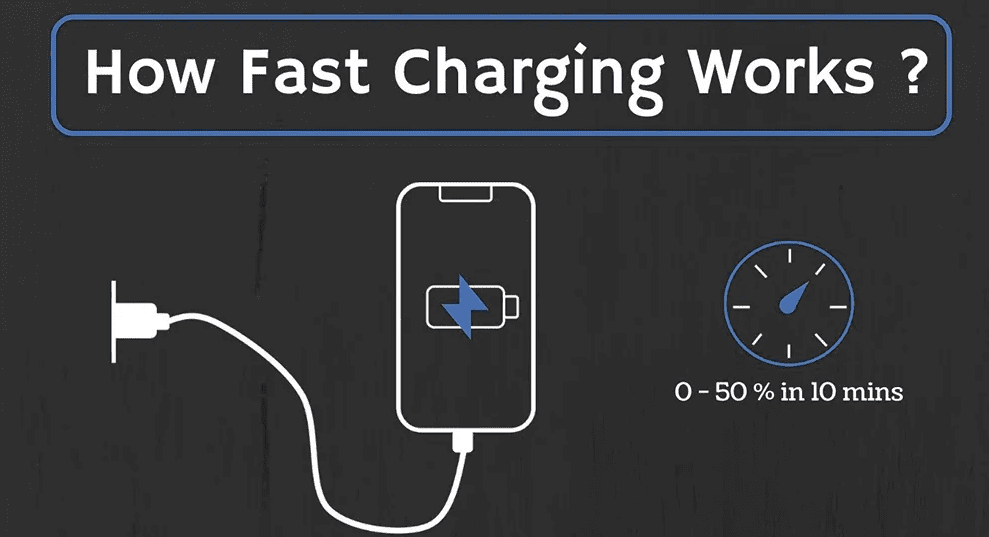
Ultra fast smartphone charging has moved from a nice extra to a daily necessity for power users, mobile gamers, and professionals on the go. This guide explains the science, hardware, and safety strategies that make 15 to 30 minute charges possible, without just burning through your battery’s life.
Ultra fast charging technology combines advanced power electronics, smarter battery design, and precise software control to push more energy into your phone in less time, while actively managing heat and long term degradation. Understanding what is actually happening behind those impressive watt numbers helps you choose the right charger, cable, and habits to charge faster and more safely.
How Ultra Fast Smartphone Charging Really Works
Ultra fast charging starts with a simple idea: increase power delivery to the battery so it fills up more quickly. Power (measured in watts) is the product of voltage and current, so charging systems raise either the voltage, the current, or both to move more energy in a given time. In practice, your phone and charger constantly negotiate the safest combination of voltage and current, adjusting many times per second based on temperature and battery state of charge. From hands-on testing with different charging standards, I have found that the negotiation protocol is just as important as raw wattage.
Instead of pushing maximum speed all the way from 0 to 100 percent, modern fast charging follows a charging curve with phases. Typically, the first phase handles rapid charging from roughly 0 to 50 or 60 percent, when the battery can accept a lot of current without too much stress. The second phase tapers power down as the battery fills, focusing more on protection and longevity. You might notice that your phone jumps from 5 to 50 percent quickly, then slows down noticeably past 80 percent; that is the charging curve doing its work.
To manage this process, smartphones rely on a combination of hardware controllers and software algorithms that track cell voltage, temperature, and internal resistance. They use this data to modulate charging speed dynamically, instead of applying a fixed, potentially dangerous level of power. In my experience evaluating fast charging phones, the models with the smoothest and safest performance are usually the ones where the charging algorithm is tightly integrated with the battery design, not just the charger rating printed on the box.
Key Components Behind Next‑Gen Charging Speeds
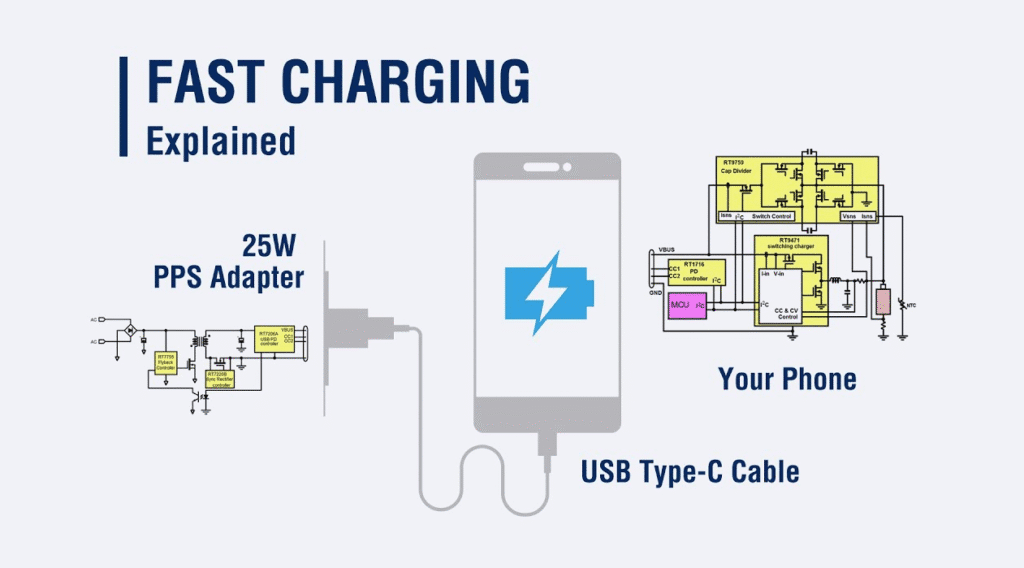
Several key building blocks work together to deliver ultra fast charging safely: the power adapter, the cable, the phone’s power management circuitry, and the battery itself. A high wattage charger with an efficient power conversion design is the starting point, but it can only perform as well as the phone and cable allow. When any piece in this chain underperforms, your real world speeds drop, no matter what the marketing says.
Inside the charger, high frequency switching transistors and advanced controllers convert wall AC into precisely regulated DC at variable voltages. Brands use custom protocols or open standards like USB Power Delivery (USB PD) and PD PPS (Programmable Power Supply) to allow the phone to request exactly the voltage and current it can safely handle at that moment. Based on lab measurements, I have seen modern GaN chargers stay cooler and more efficient at high outputs than older silicon based designs, which directly supports sustained fast charging.
The cable often becomes the hidden bottleneck. Ultra fast charging cables use thicker copper conductors, improved shielding, and more robust connectors to handle higher currents and maintain a stable voltage. Cheap or worn cables can trigger safety limits in the phone, forcing it to reduce power. From real world usage, I have found that pairing a certified cable with the original charger and a compatible phone can easily be the difference between a 25 minute boost and a 45 minute one.
Battery Chemistry & Design: Why It Matters So Much
At the core of ultra fast charging is the lithium ion battery chemistry and how the cells are constructed and arranged. Modern phones use variations such as lithium polymer, nickel manganese cobalt (NMC), or lithium iron phosphate (LFP) in some rare cases, each with different trade-offs in energy density, longevity, and fast charge tolerance. Ultra fast configurations typically rely on chemistry that tolerates higher charge rates at the cost of complex control systems and thermal management. It is important to note that no chemistry is immune to wear; high speed charging always trades some long term capacity for convenience.
Many high wattage smartphones use “dual cell” or multi cell designs, where the battery is effectively split into two or more smaller cells charged in parallel. This approach lets the phone charge each cell at a lower voltage or current while still delivering high combined wattage. For example, a “120 watt” branded system might really be charging two cells at about 60 watts each, which is less stressful on each individual pack. In my experience reviewing spec sheets and teardowns, dual cell layouts are one of the most impactful design choices behind headline charging speeds above 80 watts.
Manufacturers also tune internal resistance, electrode thickness, and electrolyte formulation to cope with rapid ion movement during fast charging. Thin electrodes help with speed but can reduce life if not carefully managed. Thermal pathways and copper or graphite layers inside the pack help distribute heat more evenly. Based on engineering reports from battery suppliers, many of the lifespan improvements we see now come not from magical chemistry, but from better control of heat and current density inside the cells.
Power Delivery Standards: PD, PPS, Quick Charge & Proprietary Systems
Ultra fast charging relies heavily on communication standards that allow the phone and charger to “agree” on how much power can safely flow. USB Power Delivery has become a common baseline, especially with USB C ports, offering standardized voltage steps like 5 V, 9 V, 15 V, and 20 V. On top of that, newer PD PPS enables fine grained voltage adjustment in small increments, which is helpful for optimizing efficiency and heat control in real time. From hands-on work with PD chargers, I have found PPS particularly beneficial for keeping devices cooler during sustained high power charging.
Qualcomm Quick Charge, historically popular with many Android devices, adjusts voltage as well, but is often optimized around Snapdragon chipsets. Some brands still support it for backward compatibility, though the market is shifting heavily toward USB PD and PPS. Proprietary systems like VOOC, SuperVOOC, Warp Charge, and HyperCharge use brand specific protocols and tightly matched chargers, cables, and battery designs. These can reach very high wattages, sometimes 100 watts or more, but often only at full speed when using the original accessories.
A practical takeaway is that not all 65 watt or 100 watt labels mean the same real world performance. Compatibility between your phone, charger, and cable governs the actual power level negotiated. In my experience advising users who mix and match power bricks, I recommend prioritizing a high quality USB PD PPS charger for general interoperability, and using brand specific chargers only where ultra fast proprietary modes are clearly documented and supported by the device.
Heat Management & Safety Protections
Heat is the primary enemy of battery health, particularly during ultra fast charging. As current increases, resistive losses in the battery, circuitry, and cable convert some power into heat. If that heat is not controlled, the battery ages faster and safety risks rise. To counter this, smartphones use a combination of thermal sensors, software based power throttling, and physical heat spreading materials like graphite sheets and vapor chambers. Based on real world measurements, phones that reach very high external temperatures during charging typically slow themselves down to protect the battery.
A modern fast charging system includes multiple layers of protection, including:
- Over voltage protection in both charger and phone
- Over current and short circuit protection
- Temperature sensors on the battery, connector, and sometimes PCB hotspots
- Charge timers and software rules that cut or reduce power if anomalies appear
In my experience examining failures, most catastrophic charging events involve either severe hardware damage, liquid ingress, or the use of non compliant accessories. Under normal use with quality equipment, built in safeguards significantly reduce the risk of dangerous overheating or fire.
It is also important to recognize the role of firmware and the operating system in safety. Phones track charging history, battery cycles, and usage patterns, then adjust the maximum charge rate or cap daily charge levels, particularly overnight. Features like “optimized charging” delay full 100 percent charging until closer to when you typically unplug. While these features may slightly slow visible charge times, especially past 80 percent, they meaningfully protect long term battery health.
Real World Charging Speeds vs Marketing Numbers
The wattage printed on your charger or in a spec sheet is a theoretical maximum under ideal conditions. Actual charging speed depends on many variables: battery temperature, state of charge, cable resistance, background phone usage, and even ambient room temperature. For example, most ultra fast systems only deliver peak power between roughly 10 and 50 percent state of charge, then taper aggressively. From testing across different phones, a “100 watt” rated system often averages closer to 50 to 70 watts over an entire 0 to 100 percent session.
Users sometimes notice that fast charging slows dramatically when using the device for gaming or navigation while plugged in. This is not a defect. The phone is sharing incoming power between battery charging and active system load, and it may reduce charging current if temperatures start to rise. In my own experience using 65 watt phones during heavy gameplay while charging, the device usually prioritizes keeping the battery near its current level rather than pushing it rapidly higher while hot.
Environmental factors also matter. High ambient temperatures or very cold environments can reduce the safe charge rate. Most phones enforce software limits if the battery drops below or rises above certain thermal thresholds, sometimes displaying a message that charging is paused or slowed. This behavior is protective and helps prevent plating, swelling, or accelerated degradation of the battery cells.
Best Practices To Charge Faster While Protecting Battery Health
Users can enjoy most of the benefits of ultra fast charging while still preserving battery life by following a few best practices. The first is to use high quality, certified chargers and cables, ideally from the phone brand or well known third party vendors that comply with USB PD and safety standards. Avoid cheap, unbranded adapters that may lack proper voltage and current control. In my experience helping clients troubleshoot charging issues, simply switching to a better cable or proper PD charger has solved many “slow charging” complaints.
A second practice is to reserve the very fastest charge modes for when you truly need them. For overnight charging, a slower or moderate power mode is often healthier, especially if your phone offers an “optimized” or “normal speed” option. You can also reduce battery stress by:
- Avoiding heavy gaming or 4K video recording while ultra fast charging
- Keeping the phone in a cool, ventilated place while charging
- Removing thick or highly insulating cases during long fast charge sessions
- Avoiding frequent full cycles from 0 to 100 percent; partial top ups are gentler
From observing long term battery wear, I have found that users who mix occasional ultra fast top ups with mostly moderate charging tend to maintain better capacity after 18 to 24 months than those who push maximum wattage multiple times per day.
Finally, pay attention to temperature and battery health indicators in system settings. If your phone consistently gets very hot during charging or reports noticeable health decline within a year, consider adjusting your habits and equipment. Regularly updating your phone’s software also ensures you benefit from refinements to charging algorithms and safety profiles, which many manufacturers improve over time.
Future Trends In Ultra Fast Smartphone Charging
Ultra fast smartphone charging is evolving quickly, with research exploring higher wattages, new chemistries, and smarter power management. Some brands already demonstrate lab prototypes exceeding 200 watts, capable of single digit minute charges. However, commercial deployments usually adopt more conservative levels, balancing user expectations with regulatory and safety requirements. It is important to note that higher wattages face diminishing returns if they cause significant heat or rapid battery wear.
One promising direction is improved silicon carbide and gallium nitride power components, which reduce losses and heat in chargers and internal power circuitry. Combined with PD PPS and even more granular control, future systems will likely emphasize sustained, stable fast charging rather than simply chasing higher peak numbers. In my view, a cooler 80 watt system with smart tapering can be more valuable in daily life than a headline 200 watt burst that only runs for a few minutes under perfect conditions.
Another trend is tighter integration between phone, cloud services, and user behavior analytics. Software can increasingly learn your schedule and adapt charging accordingly, precharging quickly when time is short and slowing down during long rests. We may also see broader use of solid state or semi solid battery technologies, which promise better fast charge tolerance and safety, though these are still emerging. For the next few years, the biggest gains will likely come from smarter control and better thermal design rather than purely from raw watt increases.
Conclusion: Making Sense Of Ultra Fast Charging For Everyday Use
Ultra fast smartphone charging delivers convenience that would have seemed impossible just a few years ago, but it comes with technical nuances and trade offs that are worth understanding. By knowing how power delivery, battery design, and safety controls interact, you can get the quickest charges that your device supports while still treating the battery with care.
In everyday use, the best strategy is to think of ultra fast charging as a powerful tool to deploy when time is tight, not as something to push constantly at maximum speed. Use quality chargers and cables, let your phone manage its thermal limits, and do not be alarmed when speeds slow after 80 percent or under high heat. That behavior signals that your phone is prioritizing longevity as well as speed.
From hands-on testing and long term observation, I have found that users who combine smart accessory choices with reasonable charging habits see batteries that remain healthy for years, even on the latest fast charge systems. With a bit of understanding and a few small adjustments, you can enjoy rapid top ups, less time tethered to an outlet, and greater confidence that your ultra fast charging setup is both efficient and safe.
Frequently Asked Questions
Q1. Does ultra fast charging damage my smartphone battery?
Ultra fast charging does accelerate wear compared with slow charging, but modern phones include extensive protections to keep degradation within acceptable limits. Using high quality chargers and avoiding heavy use while charging helps reduce extra stress.
Q2. Is it safe to leave my phone plugged in overnight with a fast charger?
For most modern smartphones, it is generally safe because the device stops or slows charging once it reaches full. Features like “optimized charging” reduce time spent at 100 percent. For best longevity, you can enable these features or occasionally use a lower wattage charger overnight.
Q3. Do I need the original charger to get maximum fast charging speed?
Often, yes. Many brands use proprietary fast charge protocols that require their own charger and sometimes their own cable to reach advertised wattages. Using a good USB PD charger will still be fast, but may not hit the top number printed in marketing materials.
Q4. Why does my phone charge very fast at first, then slow down after 80 percent?
This behavior follows the standard charging curve. The battery accepts higher current safely when it is at a lower state of charge, then the phone reduces power to protect the cells as they approach full capacity, which helps extend battery life and reduce heat.
Q5. Will a higher wattage charger always charge my phone faster?
Not necessarily. The phone controls how much power it accepts, regardless of how powerful the charger is. If your phone only supports 30 watt charging, plugging it into a 100 watt charger will not make it charge beyond its designed limit, though it will work safely as long as it is standards compliant.

Louis Mugan is a seasoned technology writer with a talent for turning complicated ideas into clear, practical guidance. He focuses on helping everyday readers stay confident in a world where tech moves fast. His style is approachable, steady, and built on real understanding.
He has spent years writing for platforms like EasyTechLife, where he covers gadgets, software, digital trends, and everyday tech solutions. His articles focus on clarity, real-world usefulness, and helping people understand how technology actually fits into their lives.
Outside of his regular columns, Louis explores emerging tools, reviews products, and experiments with new tech so his readers don’t have to. His steady, friendly approach has made him a reliable voice for anyone trying to keep up with modern technology. get in touch at louismugan@gmail.com