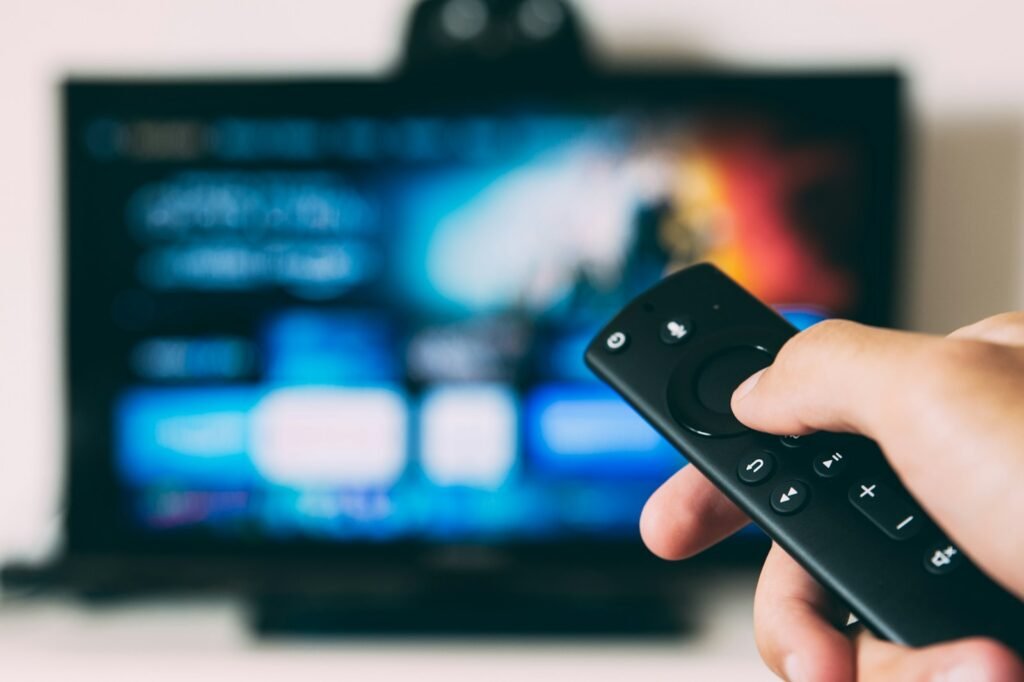
Your TV suddenly plays a show in Spanish, or a voice starts describing everything on screen: “She walks to the door and looks outside.” The cause is usually SAP, short for Second Audio Program, or a related audio-language or audio description setting. It’s a useful feature for some viewers, but when it switches on by accident it can be hard to find the off switch, because the setting might live on your TV, your cable box or inside a streaming app.
Quick answer: SAP (Second Audio Program, also called secondary audio programming) is an extra audio track that broadcasters send alongside the main soundtrack. In the US it usually carries a Spanish translation or audio description for blind and low-vision viewers. To turn it off, open your TV’s audio or accessibility settings and switch the audio language back to English and Audio Description (or Video Description) off. If you watch through a cable or satellite box, change the setting on the box instead, because the box decides which audio track the TV receives.

What is SAP on TV?
SAP began as an extra audio channel on analog TV, broadcast over the air and on cable. Digital TV works differently, but the name stuck, and TVs, cable boxes and remotes still use “SAP” for alternate audio tracks. Broadcasters decide what goes on the secondary track. In the US it is most often:
- Spanish audio for English-language shows, which is common during sports broadcasts.
- Audio description (also called video description or descriptive video), where a narrator describes key visual details during natural pauses in the dialogue.
- Other languages, or occasionally English audio on Spanish-language channels.
Audio description matters to people who are blind or have low vision, and FCC rules require major broadcast networks and large pay-TV providers to offer a set amount of it. Cable providers often put the description track on the same secondary audio stream as Spanish, which is why turning on SAP can bring either one.
SAP vs. Voice Guide and Audio Guidance
| What you hear | Feature | Where to turn it off |
|---|---|---|
| Show is in Spanish or another language | SAP / audio language | TV audio settings, cable box language settings or the app’s audio menu |
| Narrator describes scenes and actions | Audio description / video description | TV accessibility settings or cable box SAP setting |
| TV reads menus, channels and volume aloud | Voice Guide (Samsung), Audio Guidance (LG), screen reader (Roku) | TV accessibility settings |
If the voice only reads menus and buttons, it isn’t SAP. Skip to the screen reader section below.
Why SAP turned on by itself
- Someone pressed an SAP, Audio or Language button on the remote, or held a button that opens accessibility shortcuts.
- The TV or box was set to a “secondary” or “Spanish” audio preference.
- A setting carried over after a cable box, TV or app update.
- The broadcaster put audio description on the default track for a program, so it plays even with SAP off.
- You’re watching an app where the “English – Audio Description” track was picked automatically.
How to turn off SAP on a Samsung TV
Samsung TVs have two separate settings: one for audio description (narration) and one for audio language (Spanish).
Samsung calls the narration feature Audio Description, and the menu reader Voice Guide. On most recent models:
- Press Home on the remote, then go to Menu > Settings > All Settings.
- Select General & Privacy > Accessibility.
- Turn off Audio Description. If the TV also reads menus aloud, open Voice Guide Settings and turn off Voice Guide.
Shortcut: press and hold the volume button on a Samsung Smart Remote for about 2 seconds to open Accessibility Shortcuts, then turn off Audio Description or Voice Guide. Samsung notes that audio description only works when the program you’re watching supports it, and menu names can vary by model year. If the option is grayed out, it may not be available for the current source or program, so check your cable box or streaming app as well.
Show playing in Spanish? That’s an audio-language setting rather than Audio Description. On many Samsung TVs, look under Broadcasting > Audio Options: for digital channels, set Preferred Language to English; for analog channels, set Multi-Track Sound to Stereo or Mono instead of SAP. Menu names vary by model year.
How to turn off SAP on an LG TV
LG calls it Video Description. Press Settings on the remote, choose All Settings, then:
- 2021–2025 TVs (webOS 6.0 through 25): General > Accessibility > Video Description, then turn it off.
- 2026 and newer TVs (webOS 26 or later): General > Accessibility > Vision Features > Video Description.
- 2020 and older TVs (webOS 5.0 or earlier): Accessibility > Video Description.
If the TV reads menus and volume aloud, turn off Audio Guidance in the same Accessibility menu. On many LG remotes, pressing and holding the mute button opens the Accessibility menu.
How to turn off SAP on a Vizio TV
- VIZIO OS models, antenna channels: while watching an antenna channel, press the left arrow on the remote, select Settings, go to Antenna Settings > Digital Audio and set it to English.
- Most other Vizio TVs: press Menu, open the TV Channels menu, set Analog Audio to Stereo or Mono (not SAP) and set Digital Language to English.
How to turn off SAP on other TVs
- Sony: look under Settings > Sound, or the closed caption and accessibility settings. Sony notes its TV SAP setting only applies when you use an antenna or cable without a set-top box.
- Roku TV: for antenna channels, press the * (star) button while watching to open the options menu and look for audio settings; what’s available varies by model. For streaming apps, change the audio track inside the app.
- Any TV: look for Audio, Sound, Language, MTS/SAP, Accessibility or Audio Description in settings, or check the TV’s manual.
How to turn off SAP on a cable or satellite box
If you watch through a set-top box connected by HDMI, the TV’s SAP setting usually does nothing, because the box picks the audio track. Change it on the box:
- Xfinity: say “Turn off SAP” into the voice remote, or press the down arrow during a show, highlight Audio Options/SAP and turn it off.
- Cox Contour: say “SAP off” into the voice remote.
- Other providers: open the box’s Settings, then look for Language, Audio, Audio Description or SAP, and set the audio to English with SAP disabled.
Some viewers find that a specific channel keeps playing descriptions even with SAP off. If that happens, the broadcaster may be sending the description on the main track. Contact your TV provider and mention the channel.
How to turn off audio description in streaming apps
Streaming apps have their own audio tracks, separate from your TV’s SAP setting. While a show is playing, open the player’s audio and subtitles menu (often a speech bubble icon) and choose plain English instead of “English – Audio Description” or “English [AD].” If the app remembers your choice, check its accessibility settings too.
How to stop the TV reading menus aloud
- Samsung: Accessibility > Voice Guide Settings > turn off Voice Guide.
- LG: Accessibility > Audio Guidance > Off.
- Roku: press the * button four times quickly to toggle the screen reader.
If your TV still has sound problems after fixing SAP, see our guide to no sound on a TV over HDMI.
Frequently asked questions
What does SAP mean on a TV?
SAP stands for Second Audio Program. It’s an extra audio track that usually carries Spanish audio or audio description.
How do I get rid of SAP on my TV?
Turn off Audio Description and set the audio language to English in your TV’s settings. If you use a cable box, change the SAP setting on the box.
Where is SAP on a Samsung TV?
For narration, go to Settings > All Settings > General & Privacy > Accessibility and turn off Audio Description, or hold the volume button for Accessibility Shortcuts. For unwanted Spanish audio, check Broadcasting > Audio Options for Preferred Language and Multi-Track Sound.
Why is my TV describing what’s happening on screen?
You’re probably hearing an audio description track selected by your TV, cable box or streaming app. Turn it off in the TV’s accessibility settings, on your cable box, or in the streaming app’s audio menu.
Why is my TV suddenly in Spanish?
SAP or a Spanish audio preference may be selected, or the program may simply be broadcast in Spanish. Set the audio language back to English on the TV, box or app.
How do I get SAP off my TV screen?
An “SAP” label on screen may mean a secondary audio track is available or, on some models, that it’s selected. If you’re hearing normal English audio, you can usually ignore it; the label typically disappears with the channel info banner. If you’re hearing Spanish or narration, turn SAP off using the steps above.
What do Mono, Stereo and SAP mean in MTS settings?
MTS (Multi-channel Television Sound) settings choose which audio to play: Stereo for two-channel sound, Mono for single-channel sound, and SAP for the secondary audio track. Mono can also help when analog stereo reception is weak.
Is there an SAP button on my remote?
Some remotes have an SAP, MTS or Audio button. Many newer remotes don’t, so use the settings menu or voice remote instead.
How we researched this guide
We based this guide on the FCC’s audio description guide, Samsung’s Voice Guide and accessibility support pages, LG’s Video Description help article, Sony and Xfinity support pages and TV provider forums, read on November 28, 2026. Menu names vary by TV model and software version. We did not perform hands-on device testing for this guide.

Louis Mugan writes how-to and troubleshooting guides for EasyTechLife, covering Android phones, iPhones, laptops, Chromebooks, headphones and everyday software.
He aims to base each guide on official manufacturer documentation and support pages, and to link the sources so readers can check the steps for themselves. Questions or corrections? Use the contact page.