Deepfake detection has evolved into a crucial skill for security teams, journalists, brands, and everyday users who need to validate what they see and hear online. This article explains essential deepfake detection tools and techniques, along with practical workflows you can apply in real investigations.
Deepfake content now touches everything from politics and finance to personal reputations, which makes reliable detection methods more important than ever. In the sections below, you will find a practical, expert-level guide to core detection workflows and the leading tools that can help you identify synthetic media with confidence.
Core Deepfake Detection – How It Works
Modern deepfake detection starts with a layered workflow that combines human judgment, forensic tooling, and contextual verification. No single method is perfect, so the goal is to stack multiple tests that collectively raise or lower your confidence about a video, image, or audio clip. In my experience working with digital forensics teams, the strongest results come when technical analysis is paired with traditional journalistic verification methods. This hybrid mindset reduces both false positives and false negatives.
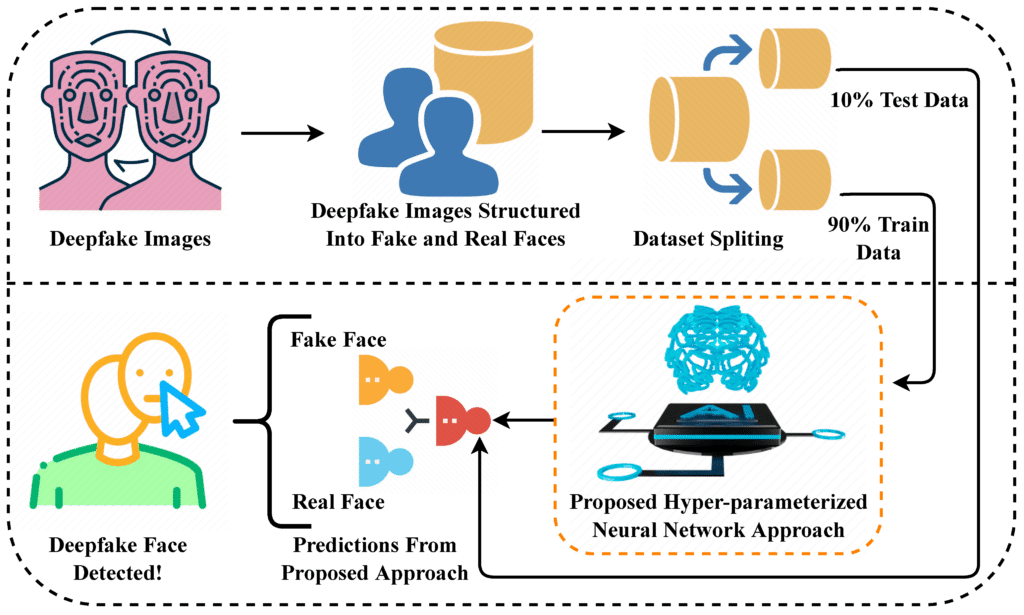
A practical workflow usually begins with a quick triage: what is the source, who shared it first, and does the file format match what you would expect for that platform or device. Next comes visual and auditory inspection, looking for subtle artifacts like strange blinking, inconsistent lighting, inaccurate reflections, or mismatched room acoustics. Only after this initial screening is it efficient to bring in heavy forensic tools, since they can be resource intensive and require technical skill to interpret.
To formalize this, many organizations use a repeatable pipeline such as:
- Ingest and preserve: Download the highest quality version, preserve metadata, and log the chain of custody.
- Human review: Perform frame-by-frame checks, slow-motion audio review, and narrative plausibility checks.
- Automated analysis: Run the content through deepfake detection algorithms and forensic software.
- Context verification: Cross-check with OSINT (open source intelligence), eyewitness reports, and trusted archives.
- Risk decision: Classify the content (likely authentic, inconclusive, likely synthetic) and document rationale.
From hands-on projects, I have found that documenting each decision point in this workflow is vital, particularly for legal or regulatory use, because conclusions about manipulated media may later be challenged.
Behavioral and Visual Cues in Deepfake Media
Before you reach for advanced AI tools, basic visual and behavioral cues can quickly flag many deepfakes. Early generations of deepfake videos often showed obvious errors like unnatural blinking, distorted teeth, or shimmering edges around the face, but modern models are significantly better. Even so, subtle telltale signs still appear in details like hairlines, ears, earrings, glasses frames, and background objects. These edge regions often reveal blending issues where the synthetic face meets the original scene.
Behavioral inconsistencies can be even more revealing than pixel-level artifacts. A person may speak in a style that does not match their usual cadence, vocabulary, or body language. Micro-expressions around the eyes and mouth might not align with the emotional content of the words. Based on real-world testing on public figures, comparing a suspect clip with known authentic footage side by side is one of the fastest ways to spot anomalies. Your brain is very good at seeing differences once you give it a clean baseline.
A systematic approach to human-level deepfake inspection might involve:
- Watching with and without sound to isolate visual and vocal patterns.
- Focusing on eyes, teeth, and jaw movement when pausing at random frames.
- Checking light direction and shadows on the face versus the background.
- Observing jewelry, hair, or glasses for unnatural warping during movement.
- Comparing suspect clips against verified footage from official channels.
It is important to note that human evaluation alone is not reliable enough for high-stakes decisions, particularly as generative models improve, but it remains a crucial, low-cost first filter.
Metadata, File Forensics, and Provenance Analysis
Metadata and file forensics tools help you understand where a piece of media came from and how it may have been altered. While many social platforms strip embedded metadata such as EXIF fields from images and videos, original files from cameras and phones normally contain timestamps, device models, GPS data, and editing history. In my experience working on media authenticity audits, examining the raw file whenever possible dramatically increases your odds of detecting manipulation.
Provenance analysis extends beyond simple metadata to investigate how a file has moved across platforms. Analysts may look at upload times, compression artifacts associated with specific platforms, and even distinctive noise patterns from particular camera sensors. When you see a supposed “live” smartphone video that has no EXIF data and exhibits compression consistent with multiple re-uploads, that alone can justify deeper scrutiny. However, the absence of metadata is not conclusive proof of a deepfake, as many workflows legitimately remove metadata for privacy or optimization.
A practical provenance workflow can include:
- Requesting original files from the source whenever feasible.
- Using tools to extract EXIF and container metadata, then logging all values.
- Comparing compression signatures with known platform encodings.
- Checking whether timestamps and time zones match the alleged context.
- Cross-referencing with OSINT: weather records, known events, and location images.
From hands-on work with clients, I have found that provenance inconsistencies are often easier to defend in court or public communications than highly technical AI model scores, because they are more intuitive to explain to non-specialists.
AI-Based Detection Models and Research-Grade Techniques
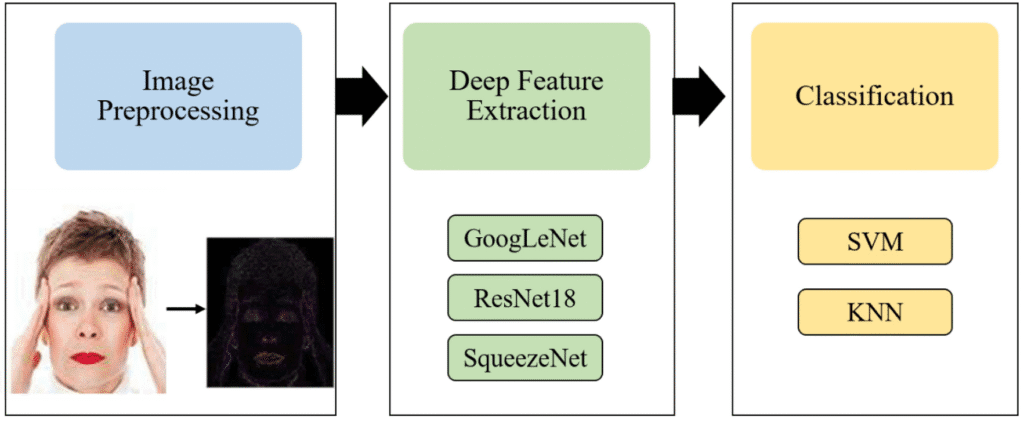
AI-based deepfake detection models analyze visual or audio patterns that are difficult for humans to see or hear. These detectors often rely on convolutional neural networks or transformer-based architectures trained on large datasets of both authentic and synthetic media. They look for statistical irregularities in color patterns, frequency domains, or facial dynamics that differ from real-world distributions. However, it is crucial to clarify that no detector currently offers guaranteed accuracy, especially on novel deepfake styles.
Researchers have developed models that study heartbeat-related micro color changes in skin, inconsistencies in head pose, or the way eyes track across scenes. Audio-focused detectors may analyze spectrograms to catch over-smoothed frequencies or unusual phoneme transitions. Based on real-world testing, combining multiple specialized detectors usually outperforms any single model, provided that you calibrate them on content similar to your use case. Mismatch between training data and real-world input can cause higher error rates.
Because attackers can adapt to static detectors, updated models and continuous evaluation are essential. A robust AI detection workflow might include:
- Routing suspect media through several independent detectors, visual and audio.
- Weighting the results based on model version, training data, and confidence scores.
- Maintaining benchmark sets of known authentic and synthetic content for periodic testing.
- Recording thresholds for action, such as “escalate for human review above 70 percent risk.”
In my experience working on machine learning pipelines, the most trustworthy setups keep the detection models, evaluation data, and decision rules under version control so that past conclusions can be audited and re-evaluated as tools improve.
Core Deepfake Detection Methods and Workflows
Core workflows for deepfake detection bring together the methods described above into end-to-end processes that can be repeated across cases. At a high level, mature organizations treat deepfake analysis similarly to incident response in cybersecurity: they define triggers, escalation paths, and documentation standards. This avoids ad hoc judgements that vary from one analyst to another. For high-impact media, a multidisciplinary team involving forensics, legal, and communications professionals often reviews findings together.
A well-structured workflow often begins with intake and triage, where suspicious content is flagged by users, automated scanning, or external alerts. At this stage, priority is assigned based on potential harm, such as impersonation of a public figure, brand impact, or risk of financial fraud. The next stage involves technical forensic analysis with tools that extract metadata, run AI-based detectors, and generate visualizations like heat maps or frequency plots. These technical outputs alone are not a final verdict; they are treated as evidence that must be interpreted.
Finally, the workflow typically ends with a risk assessment that translates technical findings into plain language. For example, a report might say, “Automated detectors show a high likelihood of facial manipulation; metadata is inconclusive; contextual checks show no corroborating coverage from trusted outlets.” From hands-on work building internal protocols, I have found that decision templates with standardized language help organizations communicate uncertainty responsibly, particularly when speaking to the public or regulators.
Leading Tools for Practical Deepfake Identification
Several categories of tools now support practical deepfake identification for professionals and advanced users. These include open source forensic libraries, commercial authenticity platforms, browser extensions, and specialized lab tools. Tool capabilities vary widely, from simple metadata viewers to complex suites offering AI-based detection, frame-by-frame analysis, and case management. In my experience working with teams that adopt these tools, integration into existing workflows is just as important as raw detection performance.
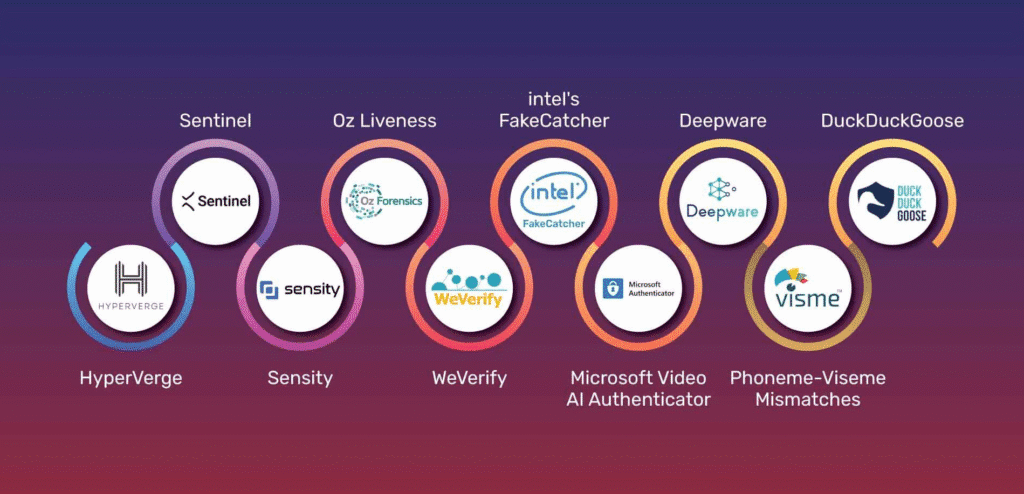
Open source options are popular in research and investigative journalism because they are transparent and extensible. Many provide:
- Video and image frame extraction for detailed analysis.
- Error level analysis and noise pattern visualization.
- Scripting interfaces for batch processing large datasets.
Commercial platforms, on the other hand, tend to focus on usability, dashboards, and support. They can centralize case management and offer policy-based alerts for brand misuse or impersonation fraud. Because marketing claims for these products can be aggressive, it is critical to review independent benchmark studies and test the tools on your own real-world samples before relying on vendor accuracy claims.
From hands-on work with clients, I have seen the best results when organizations use a mix of tools rather than relying on a single provider. This combination spreads model risk and ensures that if one detector fails on a particular synthesis method, another may still flag suspicious patterns.
Building an Organizational Deepfake Response Playbook
Deepfake detection does not end with technical analysis; it must feed into an organizational response. A deepfake response playbook defines who does what when synthetic media is suspected, confirmed, or publicly circulating. This includes legal considerations, public relations strategy, and internal communication to leadership. For companies and public institutions, such a playbook is now part of broader digital risk management.
A typical playbook might define three levels of events: “suspicion,” “likely synthetic,” and “confirmed manipulation.” For each level, it specifies which teams are notified, what type of statement (if any) is issued, and how evidence is preserved. Based on real-world incident drills, I recommend rehearsing this playbook with sample deepfake scenarios, similar to how organizations run cyberattack tabletop exercises. Practice surfaces gaps in roles, messaging, and decision speed before a real crisis hits.
Key elements of a practical deepfake playbook can include:
- Intake channels: a clear way for employees and the public to report suspect media.
- Triage criteria: how to prioritize content that threatens safety, reputation, or financial integrity.
- Forensic escalation paths: which specialists or vendors are activated for high-priority cases.
- Communication templates: pre-approved language for “under investigation,” “likely fake,” and “confirmed fake” scenarios.
- Post-incident review: a process to update tools and training based on each event.
From hands-on work with crisis communications teams, I have found that timely transparency, even when uncertainty remains, is usually better than silence, as it shows that the organization is aware, investigating, and committed to factual clarity.
Training People to Recognize and Report Deepfakes
Tools cannot replace informed people. Training staff and communities to recognize potential deepfakes greatly improves early detection. Awareness programs should not aim to turn everyone into a forensic analyst, but rather to give them a mental checklist and the confidence to escalate when something looks or feels wrong. Overly technical training can backfire by overwhelming non-specialists, so balance is important.
Effective deepfake literacy training usually covers:
- What deepfakes are and common types: face swaps, voice clones, AI-generated images.
- Basic red flags: exaggerated emotional content, improbable claims, low-resolution re-uploads.
- Simple inspection habits: reverse image search, checking official channels, looking for corroboration.
- How and where to report suspicious media internally.
In my experience working on digital literacy workshops, interactive examples work much better than static slides. Showing pairs of authentic and synthetic clips, asking participants to vote, then revealing the answer builds intuition and keeps engagement high. It is also important to clarify that even experts are sometimes fooled, so people should not feel ashamed to ask for help when in doubt.
As a factual note, training should be updated at least annually because deepfake quality and techniques evolve quickly. Static examples that were obviously fake three years ago may now seem irrelevant to modern threats.
Conclusion
Deepfake detection is no longer a niche research topic but a core element of digital trust, brand protection, and information security. By combining human judgment, forensic tools, AI-based detectors, and clear response playbooks, individuals and organizations can significantly reduce the risk posed by synthetic media, even as deepfake technology continues to advance.
A mature approach to deepfake detection treats every suspicious video, image, or audio clip as a small investigation. It starts with behavioral and visual cues, then moves into metadata, provenance checks, and specialized detection models, all anchored by documented workflows. From hands-on projects, I have found that the organizations that cope best with deepfakes are those that invest simultaneously in tools, training, and communication strategies, rather than focusing on technology alone.
Ultimately, the goal is not perfect detection, which is unrealistic, but resilient decision making. When people know how to flag suspect content, analysts have robust tools and methods, and leaders have clear playbooks for response, deepfakes lose much of their power to deceive and disrupt. Continued education, cross-industry collaboration, and transparent research will remain essential as both synthetic media and detection technologies evolve.
Frequently Asked Questions
Q1. Can deepfake detection tools guarantee 100 percent accuracy?
No, current deepfake detection tools cannot guarantee perfect accuracy. Performance depends on factors such as the quality of the input file, the type of synthetic technique used, and how similar the content is to the data on which the detector was trained. For high-stakes decisions, it is best to use multiple tools and combine technical analysis with contextual verification.
Q2. Are there simple steps non-experts can take to spot deepfakes?
Yes, non-experts can use basic checks such as looking for unnatural facial expressions, inconsistent lighting, strange blinking, mismatched audio and lip movement, and implausible context. They can also compare suspect clips with verified official channels, use reverse image search, and seek confirmation from reputable news sources.
Q3. Do social media platforms automatically detect deepfakes?
Major platforms invest in automated detection and content moderation, but they do not catch every deepfake. Detection models may focus on particular threat categories, and false negatives are still possible. Users should not assume that content is authentic simply because it appears on a large platform.
Q4. How often should organizations update their deepfake detection tools?
Organizations should review and, if necessary, update their detection tools and models at least annually, and more frequently if they operate in high-risk sectors such as finance, politics, or media. Regular benchmarking against fresh synthetic samples is essential, since attacker techniques change over time.
Q5. Are audio deepfakes easier or harder to detect than video deepfakes?
Audio deepfakes can be harder for humans to detect, especially when heard over phone lines or low-quality speakers. Specialized audio forensic tools analyze spectrograms, frequency patterns, and phoneme consistency to identify synthetic speech. Combining these tools with call-back procedures and multifactor authentication significantly reduces the risk of voice-based fraud.

Louis Mugan is a seasoned technology writer with a talent for turning complicated ideas into clear, practical guidance. He focuses on helping everyday readers stay confident in a world where tech moves fast. His style is approachable, steady, and built on real understanding.
He has spent years writing for platforms like EasyTechLife, where he covers gadgets, software, digital trends, and everyday tech solutions. His articles focus on clarity, real-world usefulness, and helping people understand how technology actually fits into their lives.
Outside of his regular columns, Louis explores emerging tools, reviews products, and experiments with new tech so his readers don’t have to. His steady, friendly approach has made him a reliable voice for anyone trying to keep up with modern technology. get in touch at louismugan@gmail.com